Land & Development
Setbacks and the Buildable Envelope
How zoning shapes what a Montana site can actually hold.
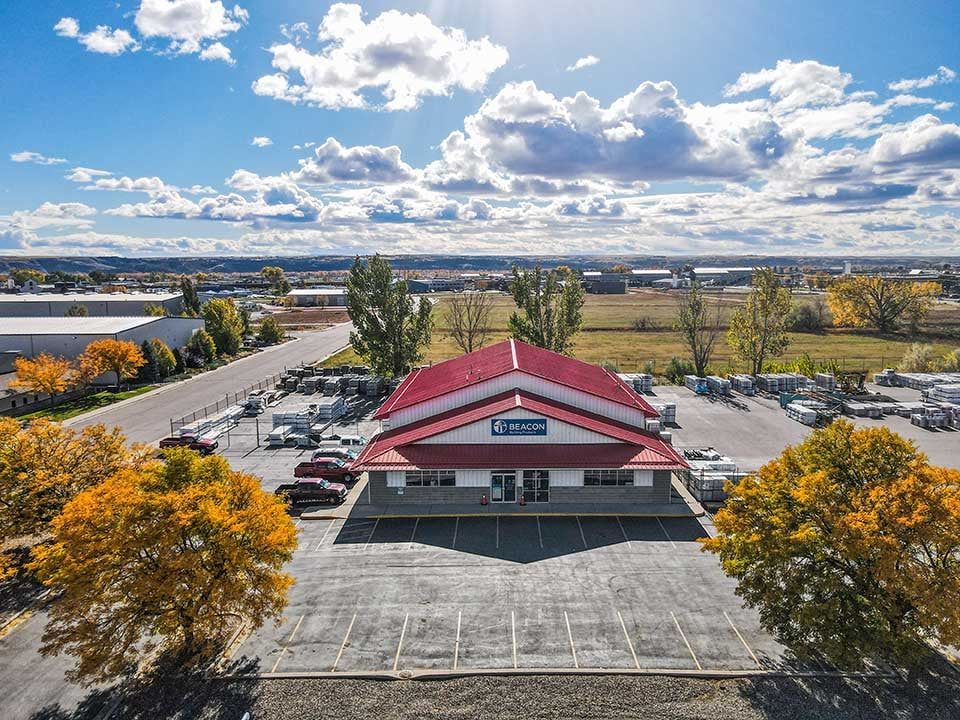
Two commercial lots of the same size can sit a mile apart and support very different buildings. The difference usually isn’t the dirt. It’s the rules drawn on top of it.
When we value a site, one of the first questions is what can legally be built there. The answer is rarely “the whole lot.”
What determines a site’s buildable envelope?
The buildable envelope is the three-dimensional space left over after the zoning code takes its share. Several rules work together:
- Setbacks. Minimum distances from the front, side, and rear lot lines. Some newer districts also use build-to zones, which set a maximum distance and pull the building toward the street.
- Lot coverage. A cap on how much of the lot buildings can cover.
- Height limits. A maximum height or number of stories.
- Parking. Where the code requires it, parking stalls and drive aisles often take more ground than the building.
- Landscaping and buffers. Required planting areas along streets and next to residential districts.
- Stormwater. New development and redevelopment usually has to manage runoff on site. Ponds and underground systems take land or money, and sometimes both.
In Billings, for example, setbacks, height, and lot coverage are set district by district in tables in the city’s zoning code. Bozeman, Missoula, and Great Falls each have their own codes, and the numbers vary by district.
A clearly hypothetical example, with round numbers. Take two 40,000-square-foot lots. The first is a rectangle with frontage on one street, in a district with modest setbacks. The second is a corner lot, backs up to a residential district, and is long and narrow. The corner may bring two front setbacks. The residential edge may add a wider rear setback and a landscape buffer. The shape may leave room for parking or a building, but not a practical amount of both.
The first might hold a building twice as large as the second. Site value follows what the site can hold, which is why a straight price-per-square-foot comparison can mislead.
What happens to a grandfathered building?
A nonconforming building was legal when it was built but doesn’t meet the current code. Maybe it sits too close to the street or has too little parking by today’s standards. It can generally keep operating.
The limits show up when something changes. Codes commonly restrict enlarging a nonconforming building or increasing its nonconformity, and they set rules for rebuilding after damage. Missoula’s zoning code, for example, has allowed a damaged or destroyed nonconforming building to be restored as long as the nonconformity isn’t increased. Other codes are stricter. Some also end a nonconforming use once it has stopped for a set period. For a lender, the question is simple: if this building burned, could it be rebuilt as it stands? The answer lives in the local code, and it matters for collateral.
Who regulates zoning in Montana: the city or the county?
Montana’s zoning authority comes from Title 76 of the Montana Code Annotated. Cities and towns zone within their limits, regulating height, building size, lot coverage, yards, density, and use. Cities with a growth policy can extend zoning up to 3 miles beyond their limits for first-class cities, 2 miles for second-class, and 1 mile for third-class cities and towns, until the county zones that area.
Counties can adopt zoning once they have a growth policy, and property owners can petition for a planning and zoning district of at least 40 acres. County zoning is optional, and plenty of rural Montana has none. That doesn’t mean no rules. Covenants, septic and well approvals, floodplain rules, and access still shape what gets built.
The larger cities have also been rewriting land use plans and zoning under the Montana Land Use Planning Act, passed in 2023. A zoning printout from a few years ago may no longer be current.
How to check
- Confirm the zoning district on the city or county zoning map, and whether the parcel is inside city limits.
- Read the district’s standards for setbacks, height, lot coverage, parking, and landscaping in the current code.
- Call the planning office. Ask about pending code changes, variances, and any nonconforming status on file.
- Pull the recorded covenants and plat from the title commitment. Covenants can be stricter than zoning.
- Ask the city engineer or public works department about stormwater requirements.
- For existing buildings, ask whether the building could be rebuilt as it stands after a loss.
Local code officials have the final say on any particular site.
Why does the buildable envelope matter for value?
Every valuation starts with highest and best use: what’s legally permissible, physically possible, financially feasible, and most productive. The buildable envelope is where the first two tests get answered.
It also drives the difference between excess and surplus land. Excess land isn’t needed for the current use and could be split off and sold or used separately, so it carries its own value. Surplus land isn’t needed either, but it can’t be separated and doesn’t have an independent use. A back acre that can be split off with its own access is worth more than one that can’t.
If you’re lending on land, or on a building with extra ground, we’re glad to work through the envelope. Rove Valuations is independent and works in all 56 Montana counties. Reach out to order a valuation or ask a question.
Have a property that raises these questions?